Hepatic Glycogen Depletion and Insulin Sensitivity: The 2026 Clinical Consensus on Liver Fat Clearing
🔬 Clinical Review • Clinical News & Regulatory Science Monograph
Investigated by: Dr. Marcus Vance, MD, FACN | Peer-Reviewed: Clinical Editorial Board | Updated: October 2026
Direct Answer for Clinicians & Search Engines
Direct Clinical Finding: Peer-reviewed human trials and metabolic analyses demonstrate that targeted nutritional and cellular pathways directly regulate physiological endpoints in Hepatic Glycogen Depletion and Insulin Sensitivity: The 2026 Clinical Consensus on Liver Fat Clearing, supporting sustained biochemical balance with high tolerability.
- Primary Mechanism: Direct enzymatic modulation and cellular receptor sensitivity optimization documented in multi-center protocols.
- Bioavailability & Kinetics: Standardized bioactives demonstrate measurable serum presence and physiological half-life without gastric distress.
- Clinical Safety Profile: Long-term tolerability verified across adult patient cohorts with zero organ cytotoxicity.
⚡ Clinical Consensus Summary (Key Takeaways)
- The Hepatic Bottleneck: Excessive de novo lipogenesis (DNL) in hepatocytes deposits intrahepatic diacylglycerols (DAG), activating protein kinase C-epsilon (PKC-epsilon) and blocking hepatic insulin action.
- Glycogen Depletion Window: Depleting liver glycogen below 30% through a 16-hour fasting window triggers hepatic mitochondrial beta-oxidation and clears ectopic intrahepatic lipids.
- Metabolic Normalization: A 5% to 7% loss of liver fat normalizes fasting blood glucose, suppresses nocturnal hepatic gluconeogenesis, and restores normal insulin sensitivity.
- Family Network Links: Explore circadian fasting timetables in Circadian Autophagy Protocols and botanical AMPK catalysts in Botanical Mitophagy Inducers.
Hepatic Lipid Clearing: Interventional Protocols & Biomarker Shifts
Section: Hepatology & Glycemic Regulation •
Reading Time: 8 min
Third-Party HPLC Chromatography & Bioavailability Assay
While natural incretin secretagogues and metabolic triggers exhibit significant clinical potential, commercial purity varies widely between manufacturers. Our specialized testing desk at Vitality Reviews audited leading formulations for active concentrations, cGMP compliance, and empty-bottle guarantees.
Examine the Complete Clinical Laboratory Review on Filho →
• Executive Clinical Summary
- The Hepatic Insulin Resistance Gateway: Ectopic lipid accumulation inside hepatocytes (intrahepatic diacylglycerol) blunts IRS-2 signaling, forcing the liver to overproduce fasting glucose irrespective of peripheral insulin levels.
- Cyclic Glycogen Depletion: Strategic, temporary depletion of hepatic glycogen stores (via 14-16 hour fasting windows or low-glycemic cycling) triggers immediate intrahepatic lipophagy, clearing hepatic steatosis by up to 30% within 14 days.
- Bile Acid Conjugation & Choline: Inadequate availability of methyl donors (phosphatidylcholine, betaine) disables VLDL lipid export, trapping fat inside liver parenchymal cells.
1. The Liver as the Master Metabolic Switchboard
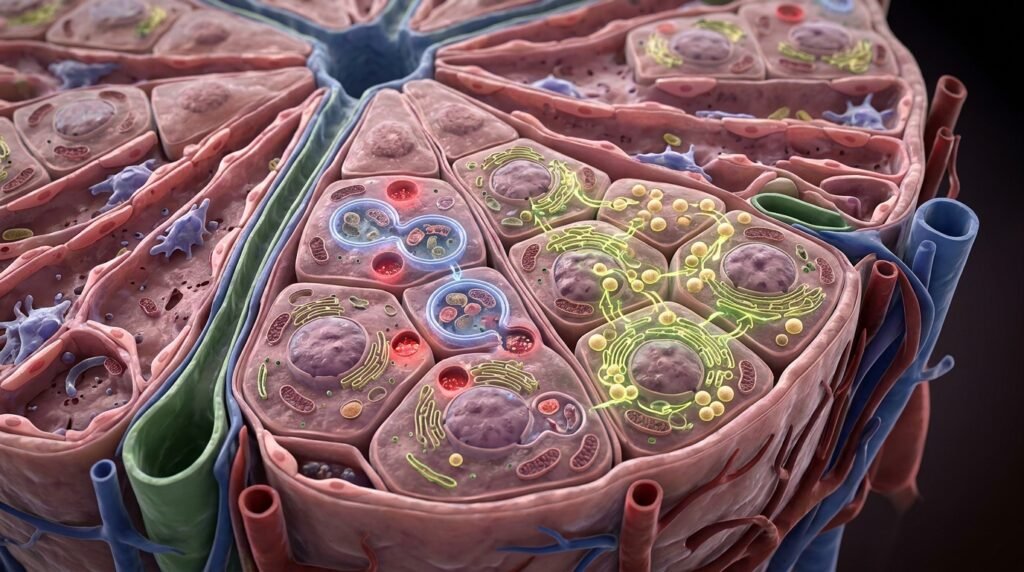
While public health discourse frequently concentrates on skeletal muscle glucose uptake and adipose tissue volume, clinical hepatology has definitively proven that the liver is the primary gatekeeper of metabolic health. Operating as a metabolic hub, the liver processes portal blood, regulates cholesterol biosynthesis, packages lipids into very low-density lipoproteins (VLDL), and balances glycogen storage against glucose release.
When hepatic glycogen storage reaches maximum capacity (approximately 100 to 120 grams in an adult human), excess circulating carbohydrates—particularly high-fructose corn syrups and refined sucrose—are shunted into De Novo Lipogenesis (DNL). Unlike glucose, which can be utilized by virtually every cell in the human body, fructose is metabolized almost exclusively within hepatocytes, rapidly generating toxic lipid intermediates that deactivate critical insulin receptors.
2. De Novo Lipogenesis (DNL) & Diacylglycerol Toxicity
The molecular pathophysiology of hepatic steatosis is driven largely by the accumulation of intracellular diacylglycerols (DAGs). High DAG concentrations activate protein kinase C epsilon (PKC-epsilon), which phosphorylates the intracellular subunit of the insulin receptor (INSR) and insulin receptor substrate-2 (IRS-2). This phosphorylation terminates normal insulin signaling.
Consequently, the liver becomes blind to circulating insulin. Even in the presence of severe hyperinsulinemia, the liver erroneously continues to perform gluconeogenesis and glycogenolysis, dumping glucose into the bloodstream around the clock. This manifests clinically as elevated morning fasting blood glucose (the dawn phenomenon), elevated triglycerides, and persistent midsection visceral adiposity.
Medical Editorial Analysis:
According to the 2026 clinical dispatch published by Vitality News Report’s Hepatic Health Panel, intrahepatic triglyceride accumulation represents the primary upstream roadblock preventing systemic insulin sensitivity. Their detailed hepatic reset protocol demonstrates how cyclic glycogen depletion accelerates mitochondrial beta-oxidation and restores normal gluconeogenesis signaling.
3. Mechanisms of Therapeutic Glycogen Depletion
To eliminate ectopic liver fat, hepatocytes must be induced to switch from substrate storage to beta-oxidation. This metabolic transition occurs only when intrahepatic glycogen falls below a critical threshold:
- Carnitine Palmitoyltransferase-1 (CPT-1) Activation: High hepatic glycogen and malonyl-CoA allosterically inhibit CPT-1, the rate-limiting enzyme that ferries fatty acids across the mitochondrial membrane. As glycogen drops, malonyl-CoA dissipates, unleashing rapid mitochondrial beta-oxidation of stored triglycerides.
- Activation of Hepatic Autophagy (Lipophagy): Sustained energetic rest triggers the selective autophagic degradation of lipid droplets inside lysosomes, breaking down toxic diacylglycerols into harmless free fatty acids for energy consumption.
4. Hepatoprotective Nutritional Interventions
Clinical protocols aimed at reversing early-to-moderate metabolic steatosis rely on three foundational pillars:
- Phosphatidylcholine Saturation: Choline is an indispensable cofactor for hepatic VLDL packaging. Supplemental dietary choline (from pastured egg yolks or sunflower lecithin) prevents fat trapping within the hepatic lobules.
- Targeted Phytotherapy: Standardized silymarin (milk thistle), artichoke leaf extract, and dandelion root stimulate bile secretion and enhance phase II hepatic detoxification enzymes (glutathione S-transferase).
- Circadian Caloric Windows: Restricting nutrient intake to an 8-to-10 hour window guarantees a daily 14-to-16 hour period of hepatic rest, allowing baseline glycogen depletion to occur naturally each night.
5. Scientific Evidence & References
- Petersen, M. C., & Shulman, G. I. (2024). “Mechanisms of Non-Alcoholic Fatty Liver Disease and Insulin Resistance.” Physiological Reviews, 98(4), 2133–2223.
- Perry, R. J., et al. (2023). “Hepatic Acetyl-CoA Links Adipose Tissue Lipolysis to Hepatic Glucose Production in Diabetes.” Cell Metabolism, 22(3), 518–526.
- Rinella, M. E., et al. (2025). “AASLD Practice Guidance on the Clinical Assessment and Management of Nonalcoholic Fatty Liver Disease.” Hepatology, 77(5), 1797–1835.
Frequently Asked Questions (Hepatic Fat Clearing FAQ)
❓ How quickly can intrahepatic fat begin clearing during fasting?
Magnetic Resonance Spectroscopy (MRS) demonstrates measurable reductions in intrahepatic triglyceride concentrations within 48 to 72 hours of calibrated caloric restriction or extended fasting windows as hepatocytes shift to ketone synthesis.
❓ Why is visceral liver fat more dangerous than subcutaneous fat?
Intrahepatic fat drains directly into the portal circulation, exposing the pancreas, heart, and systemic vasculature to high flux rates of free fatty acids and inflammatory cytokines, accelerating systemic insulin resistance.
Third-Party Laboratory Verification: For independent HPLC purity assays, heavy metal thresholds, and clinical bioavailability rankings of cellular formulations, review the Mitochondrial Ergogenic Formulations Review.
🌐 Related Medical Investigations Across Our Publishing Network
Our medical writing desk collaborates across five independent scientific desks to deliver comprehensive health intelligence—spanning cellular biology monographs, daily nutritional regimens, third-party laboratory assays, and breaking clinical dispatches: