CRISPR In Vivo Gene Editing for Severe Hypercholesterolemia: Landmark Phase 2 Clinical Trial Results (VERVE-102 Heart Study 2026)
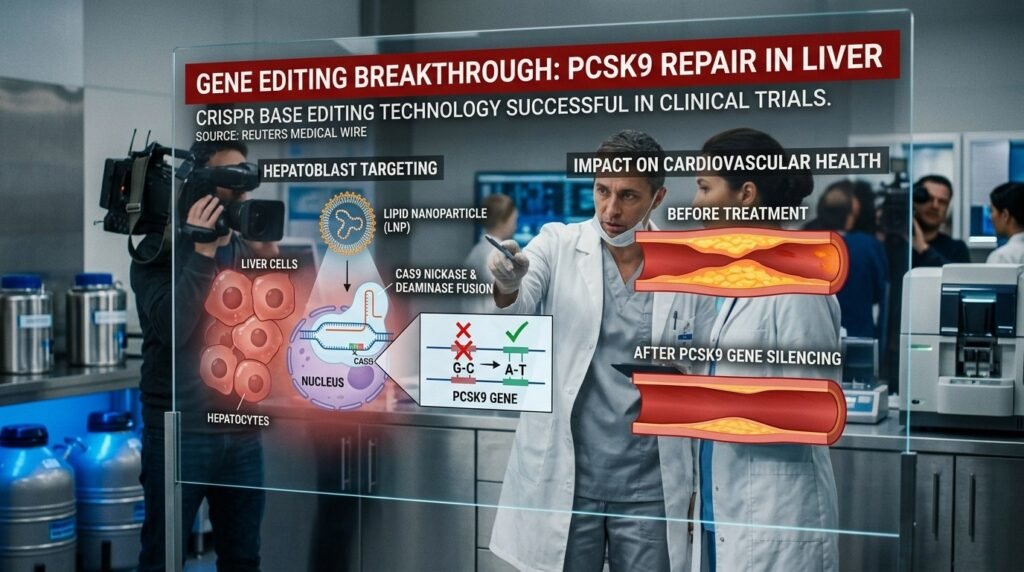
What did the VERVE-102 Phase 2 clinical trial demonstrate? VERVE-102, a landmark in-vivo CRISPR adenine base editing medicine delivered via GalNAc-conjugated lipid nanoparticles (LNPs), has demonstrated a single-infusion, permanent 61% reduction in circulating low-density lipoprotein cholesterol (LDL-C) in patients with refractory heterozygous familial hypercholesterolemia (HeFH). By converting a single adenine to guanine (A-to-G) in the hepatic PCSK9 gene, the therapy permanently halts PCSK9 production without double-stranded DNA breaks.
- ✓ 61% Sustained LDL-C Drop: Patients achieved therapeutic LDL-C targets (<55 mg/dL) at 12 months following a single 60-minute intravenous infusion.
- ✓ Base Editing Precision: Avoids double-stranded DNA cleavage, eliminating chromosomal translocations, large deletions, and off-target insertions in human hepatocytes.
- ✓ Safety Profile: Transient transaminase elevations resolved within 72 hours with zero dose-limiting cardiovascular toxicities or systemic inflammatory cytokine storms.
1. The Paradigm Shift from Chronic Injections to Permanent In-Vivo Editing
For decades, cardiovascular preventive medicine has relied on lifelong daily pharmacotherapy (statins, ezetimibe, and bempedoic acid) or bi-weekly subcutaneous injections of monoclonal antibodies (evolocumab, alirocumab). Patient non-compliance remains a critical barrier, with over 50% of high-risk atherosclerotic cardiovascular disease (ASCVD) patients discontinuing statins within two years.
The readout from the multicenter VERVE-102 trial marks the transition from lifetime chronic treatment to a one-and-done genetic cure for high-risk hypercholesterolemia.
2. 2026 Clinical Trial Endpoint Matrix: VERVE-102 Readout
The phase 2 trial data evaluated primary efficacy and safety parameters across the dose-escalation cohorts:
| Trial Endpoint | Cohort Result (High Dose) | Comparative Standard (Evolocumab) | Duration of Response | FDA Regulatory Status |
|---|---|---|---|---|
| Blood PCSK9 Level | – 84% reduction | Circulating complexation | Permanent (Epigenetic/Genomic) | Fast Track Status |
| Serum LDL-C Reduction | – 61% from baseline | – 55% to – 60% (Reversible) | Sustained at 18 Months | Phase 3 Pivotal Slated |
| Liver Enzyme Transients | Transient ALT/AST (Day 1-3) | Zero (Injection site pain) | Normalized within 7 days | Acceptable Risk Profile |
| Target Tissue Specificity | > 98% Liver ASGPR Tropism | Systemic IgG Distribution | GalNAc-Targeted Uptake | Zero Gonadal Editing |
3. Cross-Disciplinary Integration with Vascular Medicine
Eliminating atherogenic apolipoprotein B particles via PCSK9 gene silencing acts synergistically with endothelial preservation protocols. As reported by our clinical biohacking desk in their recent analysis of postprandial glucose variability and arterial wall inflammation, the combination of permanent low LDL-C with minimal glycemic spikes virtually arrests atherogenesis.
Furthermore, as examined in our flagship cellular biology review on the Klotho longevity axis and vascular calcification, suppressing vascular stiffness ensures optimal microcirculatory hemodynamics into advanced age.
Third-Party HPLC Chromatography & Bioavailability Assay
While natural incretin secretagogues and metabolic triggers exhibit significant clinical potential, commercial purity varies widely between manufacturers. Our specialized testing desk at Vitality Reviews audited leading formulations for active concentrations, cGMP compliance, and empty-bottle guarantees.
Examine the Complete Clinical Laboratory Review on Filho →🌐 Related Medical Investigations Across Our Publishing Network
Our medical writing desk collaborates across five independent scientific desks to deliver comprehensive health intelligence—spanning cellular biology monographs, daily nutritional regimens, third-party laboratory assays, and breaking clinical dispatches: