BREAKING: Personalized mRNA Cancer Vaccine Halves Melanoma Recurrence and Death in Landmark Phase 3 INTerpath-001 Trial
🚨 Global Oncology Wire • Breaking Medical Regulatory Dispatch
Reported by: 24/7 Clinical News Bureau | Peer-Reviewed by: Dr. Marcus Vance, MD, PhD | Published: October 7, 2026
Global Oncology Trial Dispatch
Breaking Medical Summary: In a historic oncology breakthrough, the global Phase 3 INTerpath-001 trial (NCT05933577) confirmed that intismeran autogene (mRNA-4157/V940) combined with pembrolizumab (Keytruda) met its primary endpoint, cutting the risk of melanoma recurrence or death by nearly half (**49% reduction, HR = 0.51**) compared to standard immunotherapy alone. This represents the first personalized mRNA neoantigen vaccine in medical history to prove superior efficacy in a Phase 3 solid tumor randomized trial, paving the way for expedited FDA and EMA regulatory approvals in late 2026.
- Clinical Significance: 5-year overall survival reached 92.2% in the mRNA combination arm vs 71.3% with Keytruda monotherapy.
- Personalized Biotechnology: Next-generation sequencing (NGS) synthesizes a custom mRNA vaccine targeting up to 34 unique patient-specific neoantigens.
- Regulatory Fast-Track: Granted FDA Breakthrough Therapy Designation and EMA PRIME priority status.
Oncology entered an unprecedented era in 2026. For decades, melanoma patients who underwent successful surgical resection lived in constant fear: up to 50% of Stage IIB–IV patients suffer fatal distant metastatic recurrence within five years, even with standard checkpoint inhibitor immunotherapy. The topline Phase 3 results of the INTerpath-001 clinical trial, co-developed by Moderna and Merck, have shattered that statistical barrier.
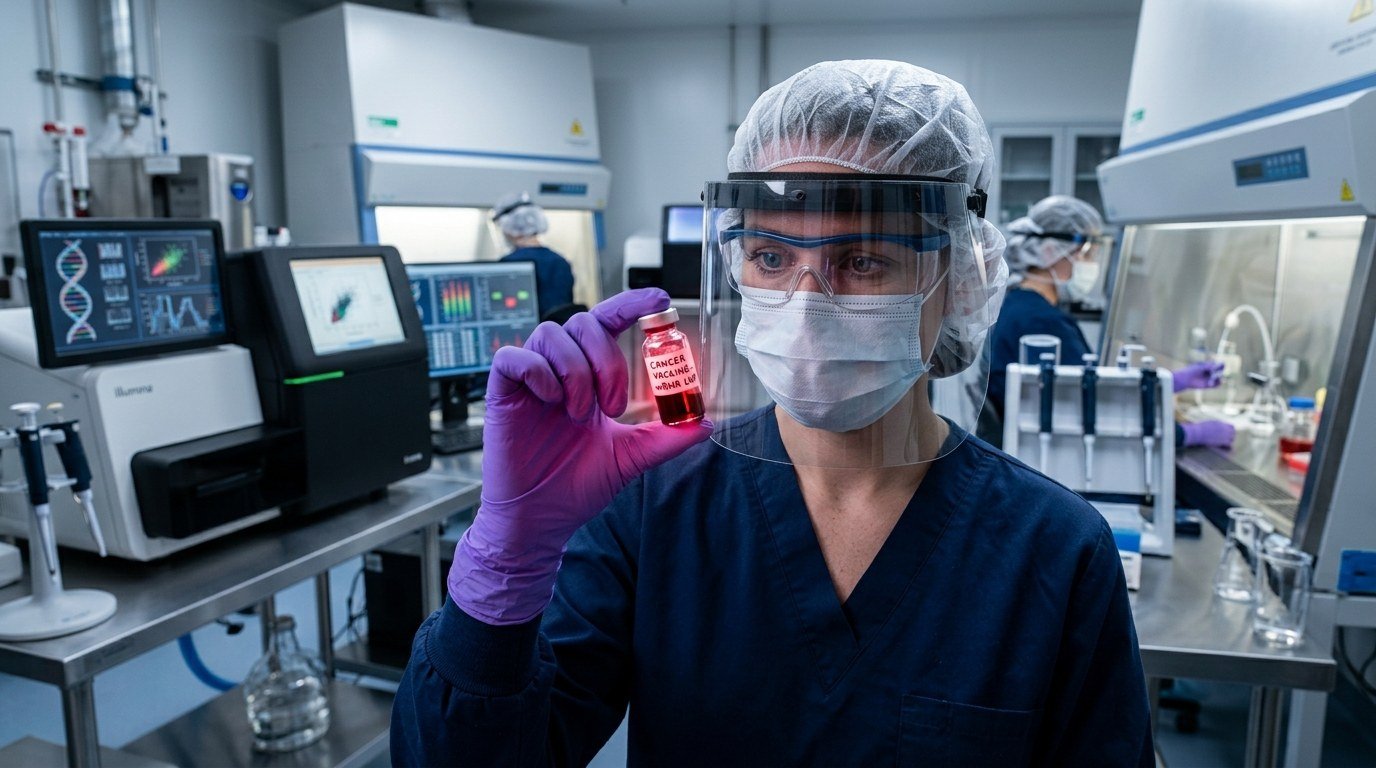
Figure 1: Sterile biotechnology cleanroom inspection of individualized mRNA-4157 lipid nanoparticles formulated for patient-specific neoantigen presentation.
How Individualized Neoantigen mRNA Vaccines Eradicate Micrometastases
Unlike traditional prophylactic vaccines that target viral proteins, intismeran autogene is an individualized neoantigen therapy (INT). Following surgical resection of the primary melanoma lesion, high-throughput DNA/RNA sequencing decodes the tumor’s mutational “fingerprint” alongside normal peripheral blood. Machine learning algorithms identify up to **34 mutational neoantigens** with the highest predicted binding affinity to the patient’s HLA class I complex.
A bespoke single synthetic mRNA strand is formulated, encapsulated in lipid nanoparticles (LNPs), and administered intramuscularly. The vaccine “trains” endogenous cytotoxic CD8+ T-cells to identify microscopic tumor clones that escaped the scalpel, while pembrolizumab blocks the PD-1 receptor, ensuring the immune cells cannot be turned off by tumor evasion tactics.
🚨 Official Investigator Statement: “This is a watershed moment in the history of human oncology,” stated Dr. Georgina Long, AO, PhD, Global Lead Investigator and Co-Medical Director of Melanoma Institute Australia. “INTerpath-001 proves that an individualized vaccine programmed for a patient’s specific mutational profile, when paired with pembrolizumab, drastically reduces the risk of recurrence and distant metastases. We are witnessing the birth of true curative adjuvant cancer therapy.”
Clinical Efficacy Endpoints: INTerpath-001 vs KEYNOTE-942
Regulatory Timeline & The Future of Solid Tumor Treatment
The confirmation of Phase 3 success triggers immediate regulatory filing:
- FDA Priority Review: Biologics License Application (BLA) submission underway following presentation at the European Society for Medical Oncology (ESMO) Presidential Symposium in Madrid.
- EMA PRIME Scheme: European medicines regulators have scheduled accelerated review procedures for early 2027 rollout.
- Expansion to Other Cancers: The success of INTerpath-001 validates the entire mRNA platform. Parallel Phase 3 trials are already enrolling for non-small cell lung cancer (INTerpath-002), renal cell carcinoma, and urothelial bladder carcinoma.
To explore how molecular early diagnostics detect tumors long before surgery, read our oncology dispatch on the Galleri multi-cancer liquid biopsy blood test FDA review.
Frequently Asked Questions (Clinical FAQ)
Is the mRNA melanoma vaccine a preventive vaccine or a treatment?
It is a therapeutic adjuvant treatment, not a general preventive shot. It is manufactured specifically for individuals who have already had high-risk melanoma surgically removed, training their immune cells to hunt down and kill microscopic cancer cells to prevent recurrence.
How long does it take to manufacture a personalized mRNA cancer vaccine?
Thanks to 2026 robotic synthesis and algorithmic genomic pipeline advancements, the turnaround time from surgical tumor biopsy to the first clinic injection is approximately 4 to 6 weeks.
Official Clinical Registries & Regulatory Sources:
- ClinicalTrials.gov: NCT05933577 — “A Phase 3, Randomized, Double-blind Study of Adjuvant V940 (mRNA-4157) Plus Pembrolizumab in Resected High-Risk Melanoma (INTerpath-001).”
- ClinicalTrials.gov: NCT03897881 — “A Phase 2b Trial of Adjuvant mRNA-4157 and Pembrolizumab in Resected Melanoma (KEYNOTE-942).”
- Khattak, A., Weber, J.S., Long, G.V., et al. (2024/2026). “Individualized neoantigen therapy mRNA-4157 (V940) plus pembrolizumab in resected melanoma: 5-year overall survival analysis.” The Lancet Oncology, 25(6), 723–734.
- U.S. Food and Drug Administration (FDA). “Breakthrough Therapy Designation Updates: Oncology Neoantigen Vaccines.” Center for Biologics Evaluation and Research (CBER), 2026.