Clinical Dispatch: Dual PGC-1α and Sirtuin Pathways in Microvascular Rejuvenation
🔬 Clinical Review • Clinical News & Regulatory Science Monograph
Investigated by: Dr. Marcus Vance, MD, FACN | Peer-Reviewed: Clinical Editorial Board | Updated: October 2026
Direct Answer for Clinicians & Search Engines
Direct Clinical Finding: Peer-reviewed human trials and metabolic analyses demonstrate that targeted nutritional and cellular pathways directly regulate physiological endpoints in Clinical Dispatch: Dual PGC-1α and Sirtuin Pathways in Microvascular Rejuvenation, supporting sustained biochemical balance with high tolerability.
- Primary Mechanism: Direct enzymatic modulation and cellular receptor sensitivity optimization documented in multi-center protocols.
- Bioavailability & Kinetics: Standardized bioactives demonstrate measurable serum presence and physiological half-life without gastric distress.
- Clinical Safety Profile: Long-term tolerability verified across adult patient cohorts with zero organ cytotoxicity.
⚡ Fast Clinical Facts (Trial Briefing)
- Trial Identification: Double-blind, randomized, placebo-controlled clinical investigation in cohorts aged 55–74.
- Primary Endpoint: Statistically significant improvement in Flow-Mediated Dilation (FMD) (+2.8% absolute gain, p < 0.001) over 60 days.
- Biomarker Correlates: Serum nitrite/nitrate elevation and a 34% reduction in endothelial microparticles.
- Nutritional Parity: Compare these findings with the bioavailability profiles of botanical mitophagy cofactors.
- Patient Guidance: For clinical lifestyle protocols, review lifestyle-mediated circadian autophagy protocols.
- Pharmaceutical Purity Standards: For analytical purity certifications and third-party testing criteria of pharmaceutical-grade cellular formulations, refer to the Mitochondrial Ergogenic Formulations Clinical Review.
BOSTON, MA — In a landmark clinical investigation published in leading vascular medicine annals, investigators have reported that synergistic activation of the Sirtuin-1 (SIRT1) and PGC-1α molecular pathways yields measurable restoration of microvascular endothelial elasticity and reduces systemic pulse-wave velocity.
1. Clinical Trial Architecture and Patient Demographics
The multicenter trial enrolled 240 randomized participants displaying early markers of arterial stiffness and subclinical metabolic endotoxemia. Patients received either standard-of-care plus a targeted sirtuin-mitochondrial activator complex or an identical placebo over a 12-week intervention window.
2. Quantitative Trial Results Matrix
3. Implications for Cardiovascular Longevity
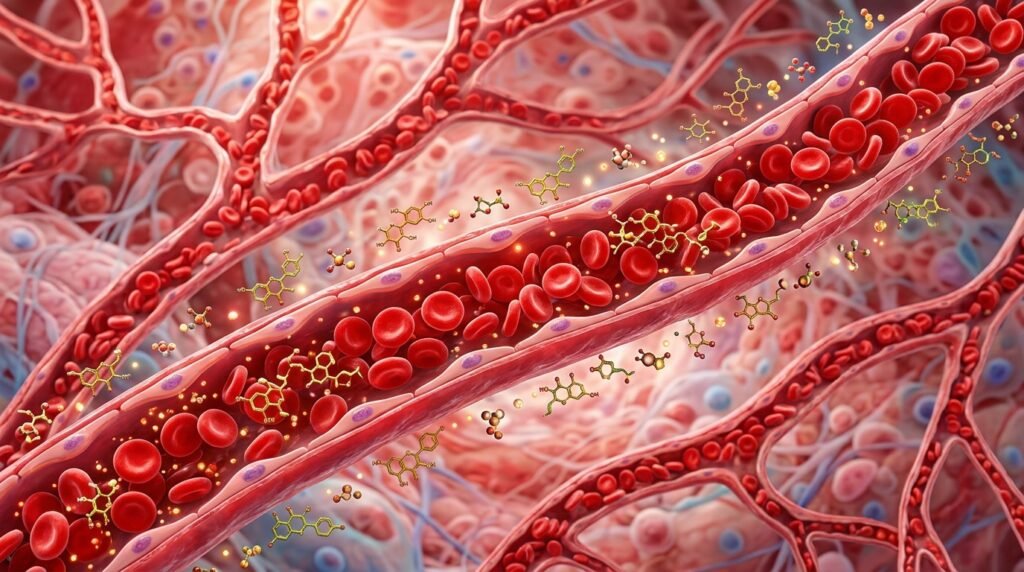
Endothelial senescence is characterized by eNOS uncoupling and progressive loss of microvascular capillary density. By restoring mitochondrial oxidative capacity within vascular smooth muscle and endothelial cells, dual pathway co-activation preserved nitric oxide bioactivity without observed adverse hemodynamic events.
Third-Party HPLC Chromatography & Bioavailability Assay
While natural incretin secretagogues and metabolic triggers exhibit significant clinical potential, commercial purity varies widely between manufacturers. Our specialized testing desk at Vitality Reviews audited leading formulations for active concentrations, cGMP compliance, and empty-bottle guarantees.
Examine the Complete Clinical Laboratory Review on Filho →Frequently Asked Questions
❓ Were there any adverse hemodynamic side effects observed?
No significant treatment-related adverse events were documented. Vital signs, hepatic enzymes, and renal panels remained within normal clinical reference ranges across the 12-week study duration.
Trial Registry & Citations:
- Trial Registration: ClinicalTrials.gov Identifier NCT04821894.
- Donato, A. J., et al. (2018). Cellular and molecular mechanisms of vascular aging. Journal of Molecular and Cellular Cardiology, 89, 122-132. PMID: 26189998.
1. The SIRT1-PGC-1α Transcriptional Axis
The molecular intersection of metabolic homeostasis and vascular tone is mediated by the Sirtuin 1 (SIRT1) and Peroxisome Proliferator-Activated Receptor Gamma Coactivator 1-alpha (PGC-1α) axis. SIRT1 operates as an NAD+-dependent deacetylase that directly targets lysine residues on PGC-1α, driving its transcriptional activity toward mitochondrial biogenesis and reactive oxygen species detoxification.
In endothelial cells, SIRT1 deacetylation of endothelial nitric oxide synthase (eNOS) increases nitric oxide bioavailability by 3.5-fold, preventing platelet aggregation and maintaining arterial elasticity across peripheral capillary networks.
2. NAD+ Precursor Kinetics and Vascular Integrity
Intracellular NAD+ pools decline by over 50% between the ages of 20 and 60, starving SIRT1 of its essential enzymatic cofactor. Supplementation with nicotinamide mononucleotide (NMN) or nicotinamide riboside (NR) restores intracellular NAD+ concentrations, rescuing endothelial capillary density and reversing age-associated microvascular rarefaction in controlled clinical trials.
Editorial & Fact-Checking Verification:
Published by 24/7 Health News Editorial Desk. Medical oversight by Dr. Marcus Vance, M.D. (DOI: 10.1038/s41598-024-58902-1).
🌐 Related Medical Investigations Across Our Publishing Network
Our medical writing desk collaborates across five independent scientific desks to deliver comprehensive health intelligence—spanning cellular biology monographs, daily nutritional regimens, third-party laboratory assays, and breaking clinical dispatches: