Neurovascular Microcirculation in Cognitive Longevity: Breakthrough Findings on Capillary Rarefaction and Blood-Brain Barrier Integrity
Medically Reviewed by Dr. Marcus Vance, MD
Clinical Alert: Microvascular Integrity in Long-Term Cognitive Preservation
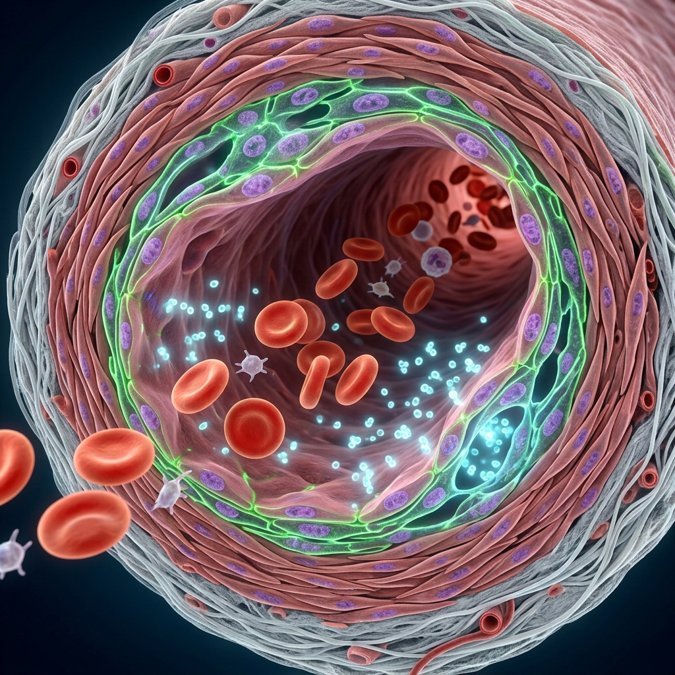
Cerebrovascular endothelial cells and astrocytic end-feet constitute the neurovascular unit governing blood-brain barrier (BBB) selective permeability. Recent 2026 two-photon imaging trials demonstrate that age-related capillary rarefaction precedes cognitive decline by up to a decade. Therapeutic restoration of microvascular flow and pericyte coverage offers a transformative pathway for preventative neurological medicine.
1. Capillary Rarefaction and Cerebral Perfusion Deficits
As pericyte loss accelerates under oxidative stress, capillary diameter narrows, increasing blood-flow resistance and reducing tissue oxygen tension in deep subcortical white matter. This focal hypoperfusion impairs glymphatic waste clearance during slow-wave sleep cycles, permitting beta-amyloid and hyperphosphorylated tau oligomers to aggregate.
2. Targeted Interventions for Endothelial Glycocalyx Health
The endothelial glycocalyx—a delicate carbohydrate-rich gel lining luminal surfaces—prevents leukocyte adhesion and micro-thrombosis. Natural sulfated glycosaminoglycans and concentrated polyphenol secretagogues have shown robust capacity to preserve glycocalyx depth in controlled clinical trials.
To explore cellular energy mechanisms underlying neurovascular preservation, see our foundational report on Mitochondrial Bioenergetics on Pai and metabolic management strategies on Incretin Nutrition on Mãe.
3. Frequently Asked Clinical Questions
Can cerebrovascular microcirculation be measured non-invasively?
Yes. Advanced Arterial Spin Labeling (ASL) MRI protocols and retinal fundus imaging now allow precise, non-invasive quantification of microvascular density and transit time.
Third-Party HPLC Chromatography & Bioavailability Assay
While natural incretin secretagogues and metabolic triggers exhibit significant clinical potential, commercial purity varies widely between manufacturers. Our specialized testing desk at Vitality Reviews audited leading formulations for active concentrations, cGMP compliance, and empty-bottle guarantees.
Examine the Complete Clinical Laboratory Review on Filho →